Becoming Together
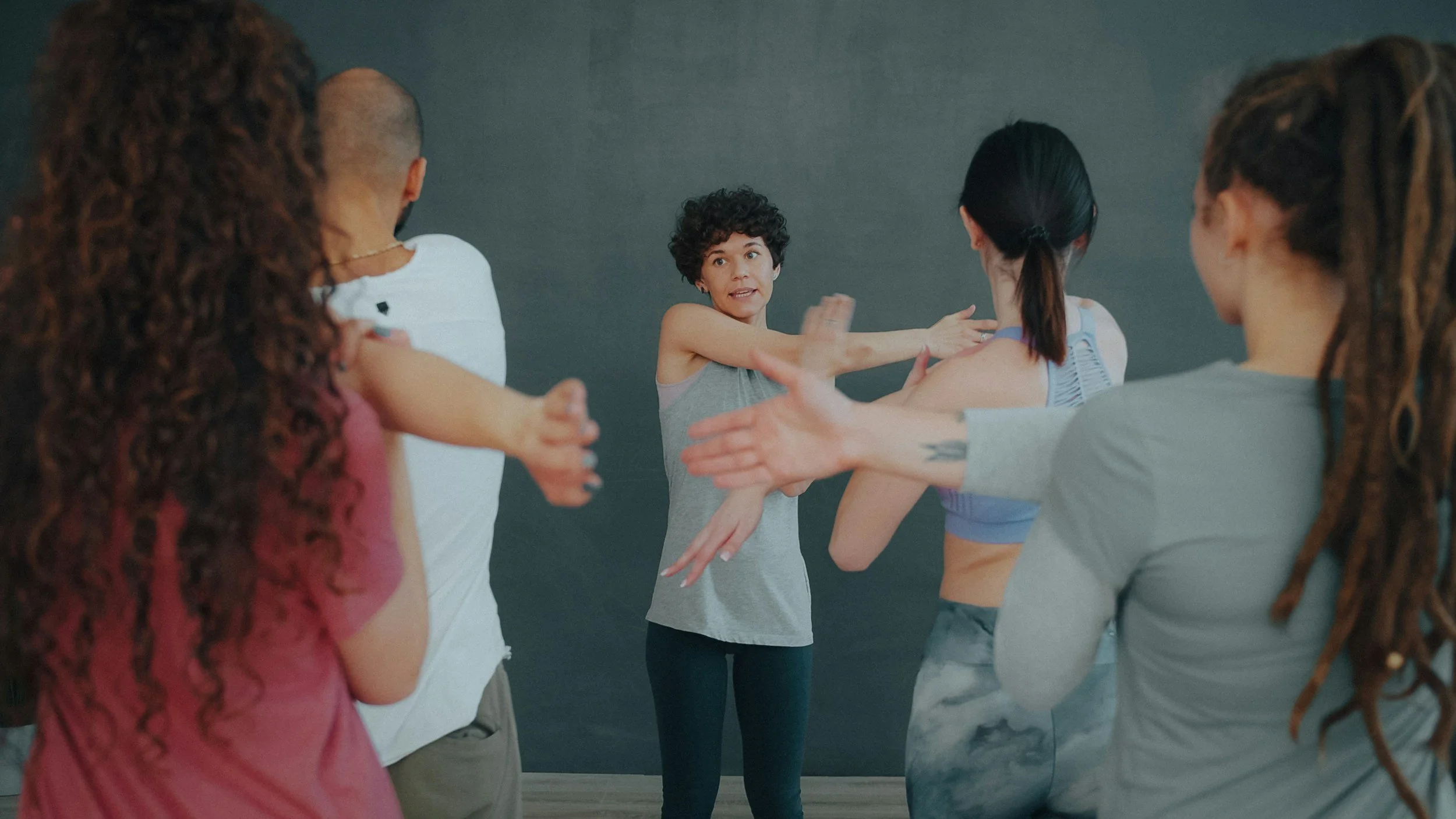
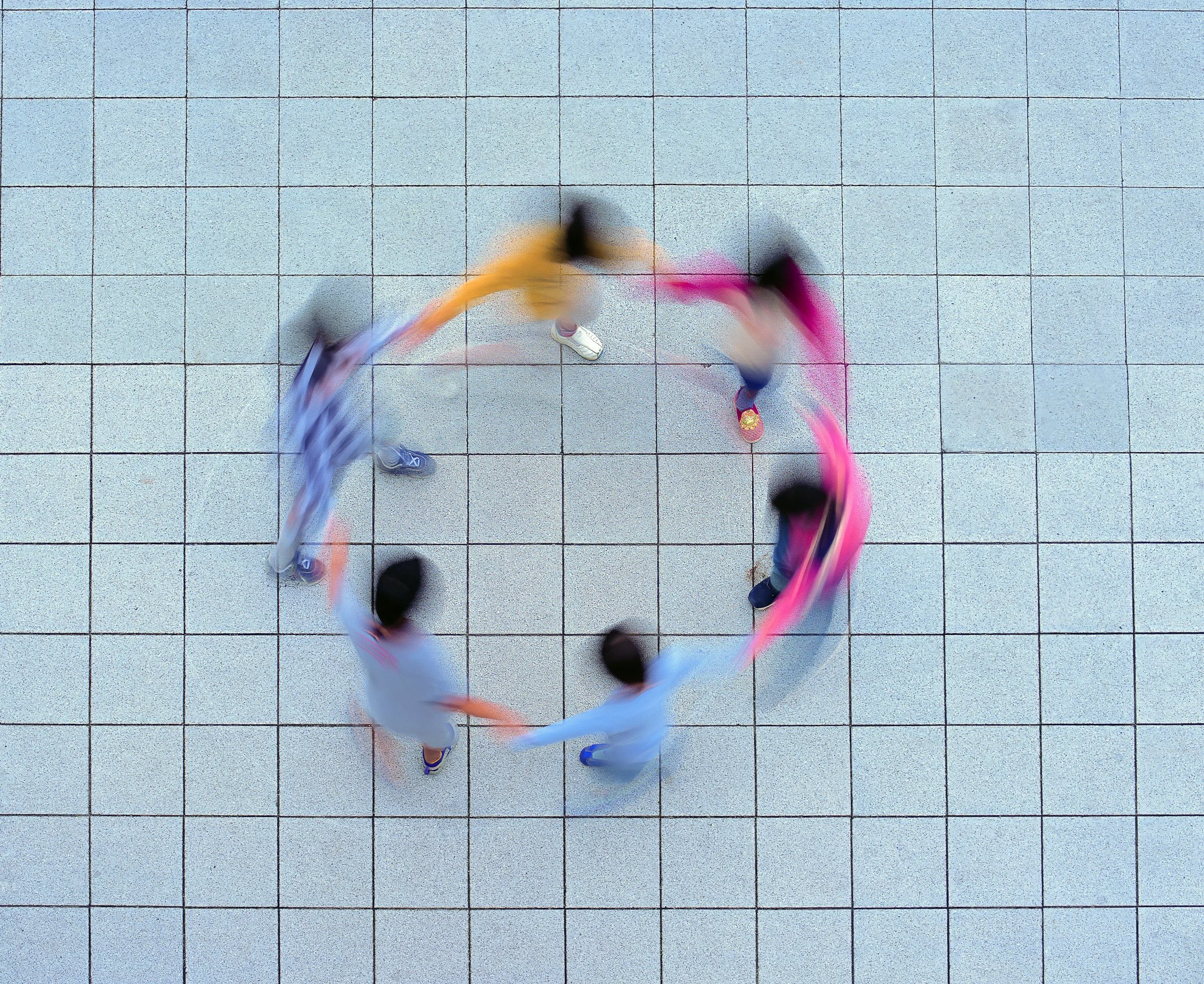
A playshop where the games are the whole practice.
Not a warm-up. The whole practice.
In rehearsal rooms, improv classes, and retreats, these games usually last ten minutes. They loosen the room, get a few laughs, and then everyone moves on to the "real" work.
Here, the games are the real work.
We start simple: a point, a word, a count to twenty. Then we layer. We repeat. We give each game time to deepen until something shifts. Judgment leaves the room. Listening tunes to a new degree. Connection stops being an effort and becomes inevitable.
Until we become together.
What emerges is a collaborative spirit, a sense of oneness, a kind of group mind. No one is performing. No one is being watched. We are simply playing, together, until we become together.
No experience needed. If you can stand in a circle, you can do this.
“It was so relaxing to feel so sensitive and connected with everyone, without really thinking about anyone in particular.”
— Participant, The Reunion Camp
Three kinds of play
Every game in the practice falls into one of three types. Each trains a different kind of attention. Together they build a group that can hold structure and surprise at once.
Pattern
We know what happens, and we know who does it. A routine we create, learn, and repeat. One person points to another and says a word; that person points to the next. The loop runs until it lives in the body. Pattern builds trust, rhythm, and shared memory.
Chaos
We know the rule, but not who will act or what they will do. A structure without a fixed sequence. Players trade places across the circle, and every round looks different. The underlying rule guides every choice, so the freedom never falls apart. Chaos builds responsiveness and the courage to move without a plan.
Mix
We know exactly what comes next, but not who will do it. The group counts to twenty, one voice at a time, with no order and no signals. If two people speak at once, we start again. Mix builds the deepest listening: sensing the room, and knowing when to step in and when to wait.
The arc: five Ps
Every session moves through the same five stages. The games change; the arc holds.
Pieces. We learn the parts: the rule, the gesture, the word. Simple, clear, a little clumsy.
Practice. We repeat until the game no longer needs thinking. Mistakes become funny instead of embarrassing.
Play. We start to have fun with it. Speed shifts, risks appear, laughter fills the room.
Plateau. The novelty wears off. This is where most groups stop, and where we keep going. Staying with it is the doorway.
Phlow. The group drops into a shared state. Judgment is gone. Time loosens. Nobody is leading and everyone is in sync.
Yes, they all start with P. That part was on purpose.
Lineage
Timeless roots. A new use. This practice draws on more than a century of ensemble work, carried through decades of Jonah Spear's training and teaching.
Moscow Art Theatre School: the "togetherness exercises" of Stanislavski and Vakhtangov, built to make actors one ensemble
National Theater Institute: ensemble-building practices for the stage
Improv in San Francisco and New York: decades of training in listening, agreement, and spontaneity
Cirque du Soleil: trust, timing, and shared risk in the air
Elizabeth Streb and the STREB Lab for Action Mechanics: bodies moving as one under real stakes
Group somatic work: practiced in parts by thousands across the globe, at camps for children and adults, and in transformational spaces over the past decade
The games are old. Giving them the whole room, and all the time they need, is new. The full practice debuted at The Reunion Camp.
About Jonah: Actor, comedian, facilitator, and somatic practitioner. Founder of Second Response and the PLAYshop methodology.
Bring it to your group
For any group that wants to become more than the sum of its parts.
Camps and retreats: an opening ritual or a full-day centerpiece
Theater and dance companies: ensemble building before a production
Teams and organizations: collaboration without the trust falls
Festivals and gatherings: a shared peak experience for any size crowd
Schools and youth programs: play-based listening and cooperation
Formats: a single 2–3 hour session, a half or full day, or a multi-day intensive that builds the arc across sessions.
For groups of about 8 to 100+. No experience needed. Adaptable for different bodies and mobility needs.